
Tag: restaurant prime cost formula

  • Improving Cash Flow for Restaurants: A 2026 Guide

    Improving Cash Flow for Restaurants: A 2026 Guide

    Table of Contents

    Last Updated: September 12, 2026

    Why Restaurant Cash Flow Gets Tight Even When Sales Look Fine

    Improving cash flow for restaurants starts with an uncomfortable truth: a busy Friday night does not mean money in the bank. Cash flow is the timing gap between when you pay for food, labor, and rent and when customers pay you. Sales on the P&L can look healthy while your operating account sits empty.

    Below, we’ll walk through the levers that free up cash, from prime costs to vendor terms, and how to build a system that holds up during slow months.

    Restaurants run on thin margins and heavy fixed costs. Rent, insurance, and salaried labor hit whether you serve ten covers or a hundred, so a slow week has no cushion unless you built one. Many operators find their cash crunch is not a revenue problem at all, it is a timing and visibility problem.

    Key Takeaway
    Healthy sales and healthy cash flow are two different things. If you cannot see your cash position by week, you are managing the business blind.

    The Restaurant Prime Cost Formula: Your First Cash Flow Lever

    The restaurant prime cost formula is simple: cost of goods sold plus total labor cost, divided by total sales. Most full-service operators aim for the low-to-mid 60% range, though the right target depends on your concept and service style (restaurant.org).

    Here is how to calculate it in practice:

    1. Add your food and beverage cost of goods sold for the period.
    2. Add all labor, including hourly wages, salaries, payroll taxes, and benefits.
    3. Divide that total by net sales.
    4. Track the number weekly, not just at month-end.

    Prime cost is your first cash flow lever because it is the largest controllable expense. When it creeps up, cash is squeezed from both ends: you spend more on ingredients and staff while collecting the same revenue. Watching it weekly lets you react before a bad month becomes a bad quarter.

    Restaurant Inventory Management Best Practices That Free Up Cash

    Restaurant inventory management best practices come down to one goal: stop tying up cash in food you have not sold. Every dollar in the walk-in is unavailable for payroll, rent, or repairs.

    The biggest culprit is dead stock, inventory that sits until it spoils or gets thrown out. Cutting it improves cash flow directly, because wasted product is money already spent and never recovered.
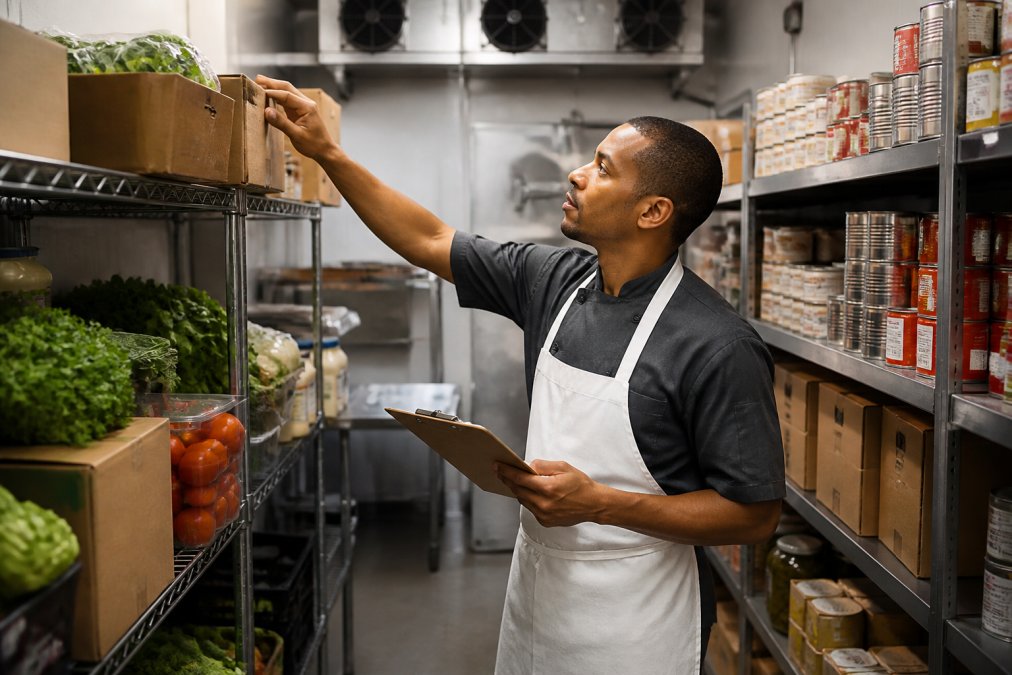
    A restaurant manager in a white apron counting boxes of produce and canned goods on metal shelving in a walk-in storage room, clipboard in hand, warm overhead lighting
    A restaurant manager in a white apron counting boxes of produce and canned goods on metal shelving in a walk-in storage room, clipboard in hand, warm overhead lighting

    Practical steps that work:

    • Count high-value items weekly, not monthly.
    • Track inventory turnover by category so slow-moving items stand out.
    • Set par levels based on actual usage, not habit.
    • Use menu engineering to push high-margin dishes and cut or reprice the losers.
    • Reconcile deliveries against invoices the same day they arrive.
    Pro Tip
    Weigh and count your ten most expensive ingredients every week. Most restaurants find the same three or four items are where the shrinkage and over-ordering hide.

    Labor Cost Control and Staffing Optimization

    Labor eats cash fastest because it is paid on a fixed schedule regardless of sales. Labor percentage, total labor cost divided by sales, is the metric to watch (restaurant.org). When it drifts above target, cash flow tightens within days.

    Staffing should follow customer demand, not a schedule written months ago. Build schedules around actual sales patterns by daypart: if Tuesday dinner is consistently slow, you do not need the Saturday-night crew.

    A few habits that protect cash:

    • Forecast sales by day and schedule to that forecast.
    • Cross-train staff so you can run lean during slow shifts.
    • Watch overtime closely; it is often cheaper to add a part-time shift than pay premium hours.
    • Review your labor percentage weekly alongside your daily sales report.

    The goal is not to understaff and hurt service, but to match labor to revenue so you are not paying for coverage you cannot afford.

    Vendor Terms, Accounts Payable, and Accounts Receivable

    Negotiating vendor terms is one of the fastest ways to improve cash flow without cutting a single cost. Stretching terms from net 7 to net 30 keeps cash in your account longer, real working capital.

    On the accounts payable side, pay on time but not early unless a discount makes it worthwhile. On the accounts receivable side, if you cater, host events, or invoice corporate clients, collect faster, every unpaid day is cash not working for you.

    Lever Action Cash Flow Impact
    Vendor terms Negotiate net 30 instead of net 7 Keeps cash longer
    Accounts payable Pay on due date, not early Preserves working capital
    Accounts receivable Invoice immediately, follow up at 15 days Speeds up cash inflow
    Deposits Require deposits on catering and events Reduces risk and upfront cost
    Watch Out
    Letting receivables slide past 30 days is one of the most common ways restaurants quietly run out of cash. A full dining room does not help if your event clients are paying you 60 days late.

    Best Accounting Software for Restaurants: What to Look For

    The best accounting software for restaurants is not the one with the longest feature list. It is the one that closes the loop between your POS, inventory and recipe data, payroll provider, and bank account, so a single day’s sales, costs, and cash position reconcile without a spreadsheet. Generic small-business software fails this test because it was built for invoicing service businesses, not daily sales reconciliation, recipe-level cost of goods sold, or tip and payroll-tax handling.

    Get Started Today →

    Most operators choose between three architectures, each with a real trade-off:

    • All-in-one restaurant platforms. A POS with a built-in back-office module handles sales, labor, and inventory in one database. Daily sales and labor import automatically and prime cost updates without manual entry, but general-ledger depth is weaker, so many operators still run a separate accounting file for tax and balance-sheet work.
    • POS plus a restaurant-aware accounting layer. A mainstream accounting platform connected through a restaurant-specific integration or middleware. This gives you a proper general ledger and cash flow statement while still pulling daily sales and cost of goods sold by category. The trade-off is setup complexity and a monthly integration fee.
    • POS plus a dedicated inventory and recipe-costing tool plus accounting. The most granular option. You get theoretical versus actual usage by menu item, which is where shrinkage and over-portioning hide. The cost is more subscriptions and reconciliation work if the tools do not share a data model.

    Whichever path you take, integration mechanics matter more than brand. Look for:

    • Daily sales import with tender-level detail. Cash, card, and third-party delivery sales should post separately, because delivery aggregators remit on their own schedule and hold back commissions. If your software lumps them together, your cash position will look better than it is.
    • Recipe-level cost of goods sold. The system should let you attach a recipe to a menu item and roll ingredient costs up automatically, so a vendor price change flows through to plate cost without a manual update.
    • Theoretical versus actual usage reporting. This is the report that compares what you should have used based on sales against what you actually purchased. The gap is waste, over-portioning, or theft.
    • Labor cost by daypart, including payroll taxes and benefits. A labor number that excludes taxes and benefits understates your true labor percentage by a meaningful margin.
    • A cash flow statement that separates operating, investing, and financing activity. This is the report that tells you whether growth is being funded by profit or by debt and vendor float.
    • Bank feed reconciliation. Automatic matching between bank transactions and your ledger is what makes weekly cash review realistic instead of a monthly chore.

    Test any option before you commit: ask the vendor to show a report combining daily sales, cost of goods sold, and labor for one week with no manual export. If they cannot produce that view natively, you will rebuild it in a spreadsheet weekly, which defeats the purpose.

    Pro Tip
    Before you switch platforms, export one month of data from your current system and try to reconstruct prime cost and weekly cash position by hand. The number of steps that takes is a good proxy for how much time a better-integrated stack will save you.

    Technology stack integration is where most restaurants leave money on the table. When your POS, accounting, payroll, and inventory tools share data, you stop re-entering numbers and see your true cash position in near real time, the difference between reacting to a cash problem and preventing one.

    Best For
    Operators who want to stop guessing and see prime cost, labor percentage, and cash position in one dashboard rather than five spreadsheets.

    Emergency Liquidity Planning and Tax Planning for Cash Flow

    Emergency liquidity planning means building cash reserves before you need them, sized to your fixed-cost structure rather than a round number. Because restaurants carry heavy fixed costs and thin margins, a reserve measured in months of total expenses is usually unrealistic. A workable target is four to eight weeks of fixed costs, rent, insurance, salaried labor, loan payments, utilities, funded gradually during strong months. The right number depends on how seasonal your concept is and how concentrated revenue is in a few dayparts.

    A reserve only works if it is funded automatically and kept separate. Route a fixed percentage of weekly sales into a dedicated savings account on a set day, and treat withdrawals as requiring a repayment plan. A reserve you dip into for routine shortfalls is just a slower version of the same cash problem.

    Tax planning for cash flow is the second half of the buffer, and where restaurants most often get surprised. Quarterly estimates are not withheld automatically like payroll taxes, so the money must be set aside deliberately. Move a fixed percentage of weekly revenue into a tax savings account alongside the reserve, then pay estimates from it, converting a quarterly shock into a weekly habit.

    Beyond setting money aside, a few tax mechanisms function directly as cash flow tools:

    • Timing of deductions and purchases. Placing qualifying equipment or improvements into service before year-end can accelerate depreciation deductions, which lowers taxable income for the current year. Section 179 expensing and bonus depreciation rules change periodically, so confirm current limits and eligibility with a tax professional before you plan around them (irs.gov).
    • Deferral where available. Certain retirement plan contributions and some business structures allow income to be deferred to a later year, which pushes the tax liability out and keeps cash working in the business in the meantime.
    • Credits you may already qualify for. The Work Opportunity Tax Credit and the FICA tip credit are two commonly overlooked credits in food service. The FICA tip credit in particular can be substantial for full-service operators, but it requires accurate tip reporting, which is another reason clean payroll data matters.
    • Entity and payroll structure. How owners pay themselves, whether through wages, distributions, or a combination, affects both self-employment tax and the timing of tax payments. This is a planning decision, not a year-end cleanup.

    Dynamic pricing also smooths cash inflow. Adjusting prices for high-demand periods, or running targeted promotions during slow dayparts, shifts revenue toward the hours you need it: a modest increase on high-demand items raises contribution margin without adding labor, while a slow-day promotion fills empty seats. The trade-off is guest perception, so tie changes to a clear value story rather than applying them across the board.

    A simple emergency plan:

    • Calculate your weekly fixed costs (rent, insurance, salaried labor, loan payments, utilities).
    • Set a target reserve equal to four to eight weeks of those costs, based on your seasonality.
    • Fund it automatically on a set day during your strongest months.
    • Open a separate tax account and move a fixed percentage of weekly revenue into it.
    • Confirm current depreciation, expensing, and credit rules with a tax professional before year-end.
    • Review your burn rate monthly so you spot trouble early.
    Watch Out
    A reserve that is not in a separate account, and not funded on a schedule, tends to get spent. The account structure is what makes the plan survive a slow month.

    Conclusion: Building a Cash Flow System That Holds Up

    Restaurant cash flow problems rarely come from one bad decision. They build from small gaps: slow inventory turns, labor that does not match demand, dragging receivables, and taxes that surprise you. Fixing them takes a system, not a one-time cleanup.

    AMG Accounting helps restaurant owners build that system. We handle bookkeeping and tax preparation, create dashboards and KPIs so you can see prime cost and cash position clearly, and explain your numbers in plain English. If revenue looks fine but cash always feels tight, that is exactly the problem we solve. Get started with AMG Accounting and turn your restaurant’s numbers into a cash flow system you can trust.

    Frequently Asked Questions

    What is the 30/30/30 rule for restaurants?

    The 30/30/30 rule is a budgeting guideline where 30% of revenue covers food cost, 30% covers labor, and 30% covers everything else, leaving roughly 10% as profit. It gives you a quick way to check whether your restaurant cash flow is on track. If food or labor creeps above 30%, your margin shrinks fast. Track these numbers weekly using your point-of-sale data and adjust portion sizes, menu prices, or scheduling before the gap widens.

    What are the most common causes of poor cash flow in restaurants?

    The biggest culprits are slow inventory turnover, overstaffing during slow shifts, and vendor terms that require payment before your own receivables come in. Dead stock ties up cash on shelves. High labor percentage eats into every shift. And when accounts payable outpace cash inflow, working capital dries up. Regular reconciliation of your daily sales report against actual bank deposits catches these problems early, before they become a crisis.

    How does inventory management impact restaurant cash flow?

    Every dollar sitting in dead stock is a dollar not available for payroll, rent, or emergencies. When inventory turnover slows, you are buying more than you sell, which drains operating accounts. Tracking turnover weekly and cutting slow-moving items frees up working capital. Simple habits like counting high-cost items daily and reviewing par levels before each order can reduce waste and keep cash reserves healthier without cutting your menu variety.

    What is a healthy cash flow margin for a restaurant?

    Most full-service restaurants aim for a cash flow margin between 5% and 15% of revenue. Fast-casual operations with lower overhead sometimes reach 15% to 20%. Below 5% leaves little room for equipment failures, slow seasons, or unexpected repairs. If your margin consistently sits under 5%, review fixed costs, variable costs, and pricing. A fractional controller or bookkeeper can assist with building a cash flow forecast.

  • Restaurant Accounting Best Practices for Owners in 2026

    Restaurant Accounting Best Practices for Owners in 2026

    Table of Contents

    Last Updated: September 7, 2026

    Restaurant accounting is the system of tracking, recording, and analyzing every dollar that flows through your food service business, from daily sales to payroll to inventory. It differs sharply from standard bookkeeping because restaurants operate on razor-thin margins, handle perishable inventory, and manage tipped employees. At AMG Accounting, we’ve helped independent operators untangle messy books, and a common thread we see is owners relying on generic accounting habits that never fit the hospitality model. Below, we’ll walk through the six steps that actually move the needle for restaurant owners, starting with why standard bookkeeping fails so many otherwise successful operations.

    Why Standard Bookkeeping Fails Restaurants

    Generic bookkeeping treats every business the same. It tracks invoices, records expenses, and reconciles the bank account, but it never accounts for the realities of a kitchen: food that spoils, staff who walk out with cash tips, and sales that fluctuate wildly between a Tuesday lunch and a Saturday dinner rush.

    The core problem is timing and categorization. A standard chart of accounts lumps “food purchases” into one broad expense line, so you never see which menu items actually generate profit. Standard bookkeeping also records income when the invoice is sent, not when the cash lands in your account, which creates a distorted picture of your daily cash position.

    Restaurants need a system built around operational rhythms: daily sales reconciliation, recipe-level costing, and tip tracking. Without those structures, your [profit and loss statement guidance from the Small Business(/services-small-business/) Administration | sba.gov] becomes nearly useless for making decisions about menu pricing or staffing levels.

    Accrual vs Cash Basis Accounting for Restaurants: Which to Choose

    Accrual basis accounting records revenue and expenses when they are earned or incurred, while cash basis accounting records them only when money actually changes hands. For restaurants, the choice matters most around inventory and unpaid invoices.

    Most small restaurants start on cash basis because it is simpler and matches their tax filing. You record a sale when the customer pays, and you record a food order when you pay the supplier. The problem emerges with inventory: you buy cases of produce in one week but sell them over the next two, so your profit for any single week looks wrong on cash basis.

    Accrual accounting solves this by matching the cost of the food you sold this week against the revenue it generated, regardless of when you paid the invoice. The IRS guidance on accounting methods requires most businesses with inventory to use accrual, though there are exceptions for smaller operations. Many owners find a hybrid approach works best: cash basis for tax simplicity, with an internal accrual-style report for tracking true monthly performance.

    Step 1: Set Up a Restaurant-Specific Chart of Accounts

    Your chart of accounts is the backbone of your entire restaurant accounting system. A restaurant chart of accounts organizes every transaction into categories that reflect how your business actually operates, not how a retail shop or law firm operates.

    Build your chart around these core groups: sales revenue broken down by dining room, takeout, and delivery; cost of goods sold tracked at the category level for food, beverages, and paper supplies; operating expenses separated into labor, occupancy, and overhead; and a dedicated section for capital expenditures like kitchen equipment.

    The key distinction from a generic chart is the separation of food cost from labor cost and the inclusion of tip-related accounts. Most restaurant accounting software platforms provide industry-specific templates, and QuickBooks’ restaurant chart of accounts guide offers a solid starting structure. A common mistake is keeping the default chart your accountant set up for your previous business and forcing restaurant transactions into it. That guarantees your financial reporting stays muddy.

    Step 2: Build a Daily Sales Reconciliation Routine

    Daily sales reconciliation is the process of matching your point of sale system’s recorded sales against your actual bank deposits and cash drawer counts. It is the single most important habit you can build because it catches theft, processing errors, and missed deposits while they are still fixable.

    Set a fixed time each morning, before service ramps up, to run your daily sales report from the POS. Compare total sales by payment type to the deposits that hit your bank account and the cash counted in the drawer. Investigate any gap immediately rather than letting discrepancies pile up for a week.

    Your routine should follow this pattern:

    1. Print or export the prior day’s sales report from your POS system
    2. Verify cash drawer count matches recorded cash sales
    3. Confirm credit card settlements match the POS totals
    4. Reconcile any comps, voids, or discounts against manager logs
    5. Record the verified totals in your accounting software

    Tracking Third-Party Delivery App Revenue

    Delivery apps like DoorDash and Uber Eats complicate reconciliation because you never see the full customer payment. The app deposits a net amount after deducting commissions, fees, and chargebacks, so your recorded sale rarely matches your bank deposit.

    Create a separate income account for each delivery platform and record the gross sale as revenue, then record the commission and fees as a contra-revenue expense. This approach keeps your gross margin accurate while showing you exactly what each platform costs you. Many owners make the mistake of booking only the net deposit, which hides the true commission percentage and makes it impossible to evaluate whether a delivery channel is profitable.

    Step 3: Master the Restaurant Prime Cost Formula

    Prime cost is the sum of your cost of goods sold and your total labor cost, expressed as a percentage of your total sales. It is the most important financial metric in the restaurant industry because it captures your two largest controllable expenses in a single number.

    The restaurant prime cost formula is straightforward: add your cost of goods sold to your total labor cost, then divide by your total sales and multiply by 100. For example, if your food and beverage costs run $28,000 for the month and your labor costs run $32,000, with $100,000 in sales, your prime cost is 60%. preserving business working capital.

    Healthy prime cost percentages generally fall between 60% and 65% for full-service restaurants, though the target varies by concept. Fast casual operations often run lower because they use less labor per plate. Tracking this number weekly, rather than monthly, lets you catch creeping food prices or overstaffing before they erase your profit. The National Restaurant Association’s operational benchmarks provide useful context for comparing your performance against industry norms.

    Get Started Today →

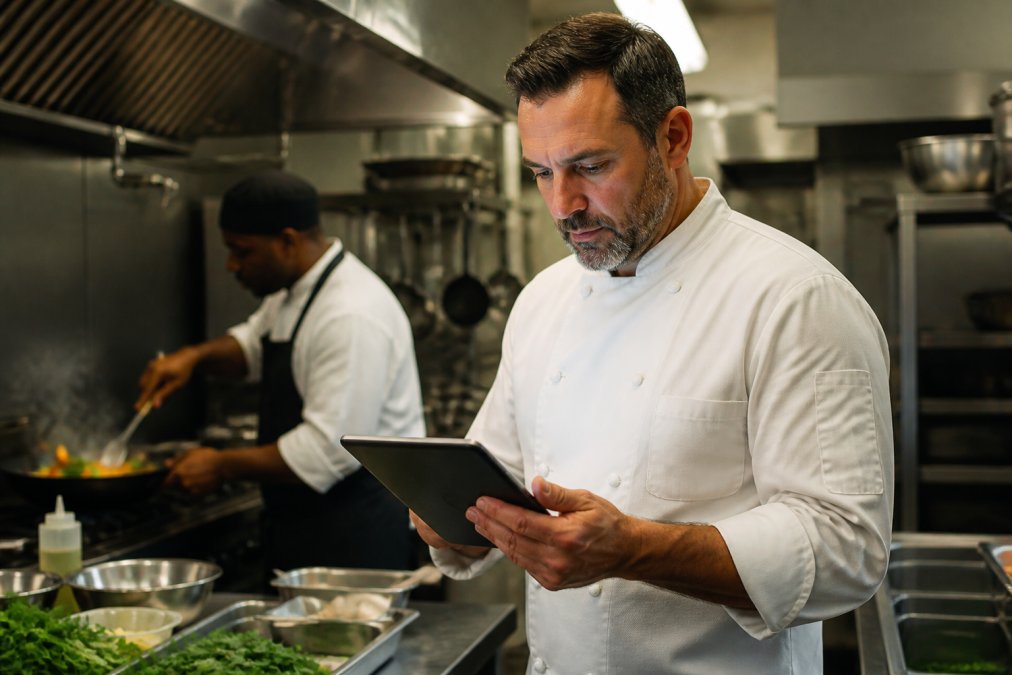
    A restaurant owner in a chef's coat reviews inventory numbers on a tablet while a line cook sautes vegetables in the background of a busy commercial kitchen
    A restaurant owner in a chef’s coat reviews inventory numbers on a tablet while a line cook sautes vegetables in the background of a busy commercial kitchen

    Step 4: Manage Inventory, Waste, and Cost of Goods Sold

    Cost of goods sold for a restaurant is not simply what you purchased during the period. It is the value of what you actually used, calculated by taking your starting inventory, adding purchases, and subtracting your ending inventory. This is where restaurant accounting diverges most sharply from other businesses.

    Conduct a physical inventory count at the same time each week or month, ideally after a consistent shift so par levels are comparable. Count everything: food, beverages, and disposable supplies. Enter those counts into your accounting system so it can calculate your true cost of goods sold and your food cost percentage.

    Waste and spoilage deserve their own accounting treatment. When you throw out spoiled product or comp a meal, record it as a separate expense line rather than burying it in food cost. This gives you visibility into whether your waste is a purchasing problem, a storage problem, or a kitchen prep problem. Many operators find that a simple waste log, filled out daily by the kitchen manager, reveals patterns that cut food cost noticeably within a few weeks.

    Step 5: Use a Restaurant Profit and Loss Statement Template

    A restaurant profit and loss statement template organizes your revenue and expenses into the sections that matter for hospitality decisions. The standard P&L format used by accountants falls short because it does not separate prime cost from other operating expenses or show contribution margin by revenue stream.

    Build your restaurant P&L with these line items in order: total sales, then cost of goods sold, then prime cost, then other operating expenses, then EBITDA and net income. Show sales broken out by dining room, takeout, and delivery so you can see which channels drive profit.

    P&L Section What It Includes Why It Matters
    Total Sales All revenue by channel Shows which streams drive growth
    Cost of Goods Sold Food, beverage, paper costs Tracks menu profitability
    Prime Cost COGS plus total labor Your two biggest controllable costs
    Operating Expenses Rent, utilities, marketing Fixed and semi-variable overhead
    Net Income What remains after all costs The real bottom line

    Review this statement at least monthly, and ideally review a weekly version that estimates food and labor costs so you can react faster than your monthly close allows.

    Step 6: Pick the Best Accounting Software for Restaurants

    The best accounting software for restaurants depends on your size, your number of locations, and how much operational integration you need. The market splits into general accounting tools and restaurant-specific platforms, and the right choice hinges on whether you need built-in inventory and recipe costing.

    For single-unit independent restaurants, general tools like QuickBooks Online or Xero provide a reliable foundation. QuickBooks Online starts at $30 per month and offers extensive integrations with POS systems and payroll providers, though it lacks native recipe-level costing. Xero, starting at $15 per month, appeals to owners who want a clean interface and strong mobile access, but advanced reporting is limited on entry-level plans.

    For multi-unit operations or full-service restaurants that need deep operational integration, Restaurant365 is built specifically for hospitality with automated daily sales entries from POS systems and recipe-level inventory tracking. Sage Intacct and NetSuite serve growing chains with enterprise-level consolidation and audit trails, but their implementation costs and complexity exceed what most independent operators need.

    Software Starting Price Best For Key Limitation
    QuickBooks Online $30/month Small independent restaurants No native recipe costing
    Xero $15/month Owners wanting ease of use Limited advanced reporting
    Restaurant365 Contact for pricing Multi-unit full-service groups Steeper learning curve
    Sage Intacct Contact for pricing Growing chains High implementation cost

    Whichever platform you select, the software is only as good as the structure behind it. A restaurant accounting system that syncs your POS, tracks inventory at the recipe level, and generates a prime cost report weekly will save you hours of manual work each month. At AMG Accounting, we help owners configure these tools properly, set up daily reconciliation workflows, and build the dashboards that show whether the business is actually making money. If your current books leave you guessing about your cash position or your true food cost, our team can get you organized and keep you that way, explaining every number in plain English.


    Running a profitable restaurant demands more than great food and busy shifts. It requires a financial system built for the realities of perishable inventory, tipped staff, and volatile daily sales. The six steps above, from a restaurant-specific chart of accounts to daily reconciliation and prime cost tracking, give you the foundation to know your numbers cold. AMG Accounting provides bookkeeping, tax preparation, and fractional controller services tailored to independent restaurants, along with the SOP writing and KPI dashboards that turn raw data into clear decisions. Get started with AMG Accounting and bring your restaurant’s finances under control.

    Frequently Asked Questions

    Should restaurants use cash or accrual accounting?

    Most restaurants should use accrual accounting because it matches revenue with the expenses incurred to generate it. Cash basis only records money when it changes hands, which can hide the true cost of a busy month until the invoices arrive. Accrual gives you an accurate profit and loss statement each period, which matters for food and labor decisions. Talk with your accountant about your specific situation, especially if you carry inventory or pay vendors on net terms.

    What is the restaurant prime cost formula?

    Prime cost is the sum of your cost of goods sold (COGS) and your total labor cost, including taxes and benefits. The formula is: Prime Cost = COGS + Total Labor Cost. Most successful restaurants aim to keep prime cost between 60% and 65% of total sales. Tracking this number monthly shows whether your two largest expenses are in balance and helps you spot problems before they wipe out your profit margin.

    What is the 30/30/30 rule for restaurants?

    The 30/30/30 rule is a rough budgeting guideline for restaurant expenses. It suggests that food cost, labor cost, and overhead expenses (rent, utilities, insurance) should each account for roughly 30% of your total revenue. That leaves about 10% as profit before taxes. It is a starting benchmark, not a universal target. Your actual percentages depend on your concept, location, and menu pricing, so track your own numbers monthly.

    What is the best accounting method for restaurants?

    Accrual accounting is generally the best method for restaurants. It records transactions when they happen, not when cash moves, giving you a truer picture of profitability each month. This matters because you might pay for food weeks after you sell it. Accrual accounting also handles inventory and unpaid invoices correctly. If you run a very small cash-only operation, cash basis might work, but you will outgrow it quickly.

    How often should a restaurant owner review their financial statements?

    Review your key financial statements at least monthly, and check your daily sales report every day. Your daily report should reconcile POS totals against bank deposits. Monthly, look at your profit and loss statement, food cost percentage, labor cost percentage, and prime cost. Quarterly, review your balance sheet and tax liability. This rhythm catches small problems like rising food costs before they become cash flow crises.

    How do you track tips and payroll taxes for restaurant staff?

    Track tips separately from wages in your payroll system. Report cash tips received by employees, and allocate credit card tips when your POS data is imported. Your payroll provider should handle federal and state tax withholding on both wages and reported tips. Keep detailed records of tip allocation, since the IRS requires you to report tips as income. An integrated payroll system that connects to your accounting software simplifies this process.