
Table of Contents
- Who Qualifies for the Home Office Deduction
- Home Office Deduction Rules You Must Follow
- Simplified Home Office Deduction Method
- Actual Expense Method for Home Office Deductions
- Home Office Expense Examples and Eligible Costs
- Home Office Deduction Recordkeeping and Documentation
- Common Mistakes to Avoid When Claiming the Home Office Deduction
- Frequently Asked Questions
Last Updated: October 15, 2026
Who Qualifies for the Home Office Deduction
Not everyone can claim a home office deduction. The IRS has specific rules about who qualifies. Understanding these rules is the first step toward maximizing your tax savings.
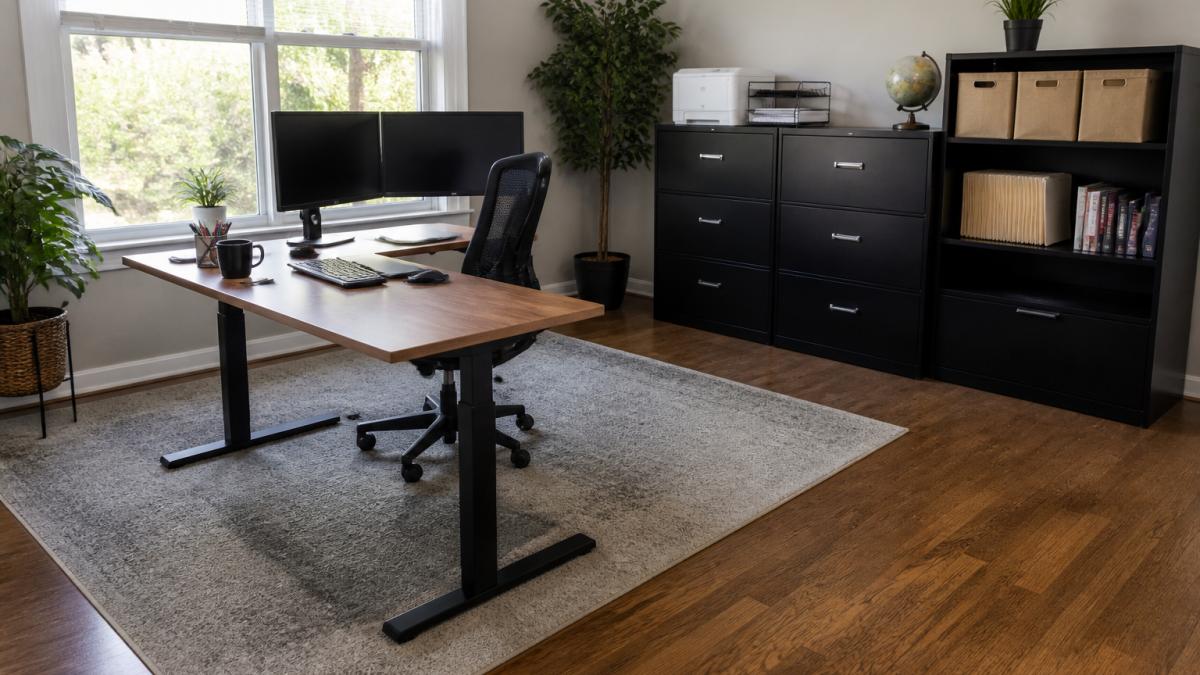
The home office deduction is available to self-employed individuals, independent contractors, and employees who work from home. Each group has different eligibility requirements. At AMG Accounting, we help small business owners and contractors navigate these rules to ensure they’re claiming every deduction they’re entitled to.
Self-Employed and Independent Contractors
Self-employed individuals and independent contractors have the broadest access to the home office deduction. If you run your own business or work as a freelancer, you likely qualify.
You must use your home office for business purposes. The space should be where you conduct your work regularly. This could be a dedicated room, a corner of your living space, or even a shared area, as long as you use it consistently for business.
Independent contractors often struggle with tax organization. Many don’t realize how much they can deduct. The key is documenting your business use clearly and keeping organized records throughout the year.
Employees Working from Home
Employees can also claim the home office deduction, but the rules are stricter. Your employer must require you to work from home as a condition of employment. Working from home by choice typically does not qualify.
Additionally, your home office must be your principal place of business. This means it’s where you spend most of your work time. If you have an office at your employer’s location where you work part-time, the home office deduction becomes harder to justify.
The distinction between employee and self-employed status matters significantly. Employees face more scrutiny from the IRS. Documentation is critical if you’re claiming this deduction as an employee.
Home Office Deduction Rules You Must Follow
The IRS enforces three core requirements for the home office deduction. Missing even one disqualifies your entire deduction. These rules apply regardless of whether you use the simplified or actual expense method.
Exclusive Use Requirement
Your home office space must be used exclusively for business. This is non-negotiable. If you use your desk for personal tasks, bills, or hobbies, the space no longer qualifies.
Exclusive use means the area is dedicated to business only. A guest bedroom that doubles as your office fails this test. A corner of your kitchen where you occasionally work doesn’t qualify either.
Many people think exclusive use is too restrictive. In reality, it protects your deduction. The IRS wants clear evidence that the space serves a business purpose, not personal convenience.
Regular Use Requirement
You must use your home office regularly and consistently. Occasional use doesn’t count. If you work from home three days a week, that’s regular use. If you work there once a month, it’s not.
Regular use establishes that the space is necessary for your business. The IRS looks at your work patterns over the tax year. Consistency matters more than frequency.
Document when you work from home. Keep a simple log or calendar notation. This creates evidence if the IRS ever questions your deduction.
Principal Place of Business
Your home office must be your principal place of business. This is where you conduct your main business activities. If you have multiple work locations, your home office should be where you spend the most time.
The principal place of business test has become more flexible in recent years. Courts have recognized that business owners manage administrative tasks from home even when they work elsewhere.
For remote workers and independent contractors, this rule is usually straightforward. Your home is likely your only work location. Employees face more complexity, especially if they work part-time at an employer’s office.
Simplified Home Office Deduction Method
The simplified method makes calculating your deduction easy. You don’t need receipts or detailed expense tracking. This approach works well for most small business owners and remote workers.
How the Simplified Method Works
The simplified method allows you to deduct $5 per square foot of your home office space (Simplified option for home office deduction). You multiply your office’s square footage by $5. That’s your annual deduction.
The calculation is straightforward. Measure your office space in square feet. Multiply by $5. That number goes directly on your tax return.
The maximum simplified deduction is $1,500 per year. This occurs when your office is 300 square feet or larger. Most home offices fall well below this limit.
No receipts required. No expense tracking needed. No depreciation calculations. The simplified method eliminates administrative burden.
When to Choose the Simplified Method
Choose the simplified method if your home office is small to medium-sized. It works best for spaces under 200 square feet.
The simplified method also suits people with straightforward home office situations. If you rent your home or have a simple mortgage, this method saves time and complexity.
Many independent contractors prefer the simplified approach. It requires minimal recordkeeping. You can claim the deduction without extensive documentation.
However, the simplified method may not maximize your deduction if you have significant home expenses. Utility bills, insurance, repairs, and maintenance can add up quickly. If your actual expenses are high, the actual expense method might yield a larger deduction.
Actual Expense Method for Home Office Deductions
The actual expense method lets you deduct real business expenses. This approach requires more documentation but often produces larger deductions. It works best when your home office expenses are substantial.
Calculating Your Business-Use Percentage
The business-use percentage is the foundation of the actual expense method. Measure your home office square footage. Divide it by your total home square footage.
For example, if your office is 200 square feet and your home is 2,000 square feet, your business-use percentage is 10 percent.
Accurate measurement is critical. Use a tape measure or your home’s floor plan. Document your measurements. The IRS may request this information during an audit.
Square footage changes affect your deduction. If you renovate or add space, recalculate your percentage. Keep records of any changes.
Direct and Indirect Expenses
Direct expenses are costs that benefit only your home office. These include office furniture, equipment, and office-specific repairs. Direct expenses are 100 percent deductible.
Indirect expenses benefit your entire home. These include mortgage interest, property taxes, utilities, insurance, and maintenance. You deduct only the business-use percentage of indirect expenses.
Understanding the distinction matters. Misclassifying expenses can trigger IRS scrutiny. Direct expenses are safer because they’re fully deductible. When in doubt, treat an expense as indirect and apply your business-use percentage.
Home Office Expense Examples and Eligible Costs
Knowing which expenses qualify saves money and prevents mistakes. The IRS allows deductions for costs directly tied to your home office or your entire home’s operation.
Direct Expenses You Can Claim
Direct expenses are straightforward to deduct. Office furniture qualifies: desks, chairs, filing cabinets, and shelving. Office equipment includes computers, printers, and phones used exclusively for business.
Repairs specific to your office count as direct expenses. Painting your office, fixing the office door, or replacing office flooring all qualify. These are 100 percent deductible.
Office supplies and software licenses are direct expenses. Internet service used exclusively for business qualifies. Phone lines dedicated to business work qualify.
Depreciation of office furniture and equipment can be deducted. This requires tracking purchase dates and costs. Many small business owners find depreciation complex. The simplified method avoids this entirely.
Indirect Expenses and Utilities
Indirect expenses require applying your business-use percentage. Mortgage interest on your home qualifies as an indirect expense (Topic no. 509, Business use of home). Property taxes are indirect expenses.
Utilities including electricity, water, gas, and internet are indirect expenses. If you have a separate internet line for business, that line is a direct expense. Your primary home internet is indirect.
Home maintenance and repairs are indirect expenses. Roof repairs, HVAC maintenance, and general upkeep all qualify. You deduct only your business-use percentage.
Home depreciation is an indirect expense. This is complex and has tax consequences when you sell your home. Many people avoid claiming depreciation to simplify their situation.
Home Office Deduction Recordkeeping and Documentation
The IRS expects organized records. Poor documentation invites audits. Good recordkeeping protects your deduction and proves your eligibility.
What Records the IRS Expects
Keep receipts for all direct expenses. Invoices from contractors, purchase receipts from office supply stores, and credit card statements all serve as documentation. Digital copies are acceptable.
Maintain records of your home’s square footage and your office’s square footage. Photographs of your office space help prove exclusive use. A simple floor plan showing your office location is valuable.
For indirect expenses, keep utility bills, insurance statements, and mortgage documents. These establish the cost basis for your business-use percentage calculation.
Create a ledger or spreadsheet tracking all expenses. Include the date, description, amount, and category. This organization makes tax preparation easier and demonstrates good faith recordkeeping to the IRS.
Organizing Records for Tax Year 2026
Start organizing records now. Create a folder, digital or physical, for home office expenses. Separate direct expenses from indirect expenses.
For the simplified method, you need minimal records. Just document your office’s square footage. Keep a note of the measurement method and date.
For the actual expense method, organize receipts by category. Create folders for utilities, repairs, insurance, and other expense types.
Keep records for at least three years (How long should I keep records?). The IRS can audit returns up to three years old.
At AMG Accounting, we recommend our clients maintain organized records throughout the year. This approach eliminates last-minute stress and ensures nothing is missed.
Common Mistakes to Avoid When Claiming the Home Office Deduction
Many taxpayers make preventable errors when claiming the home office deduction.
Don’t claim exclusive use if the space serves multiple purposes.
Don’t mix personal and business use. If you watch television in your office, you’ve compromised exclusive use.
Don’t forget to measure accurately. Eyeballing square footage leads to errors. Use a tape measure.
Don’t ignore the principal place of business requirement.
Don’t overlook recordkeeping. The IRS will request documentation if they question your deduction.
Don’t confuse tax year with filing year.
Claiming exclusive use when the space serves multiple purposes is the most common audit trigger. The IRS specifically looks for home offices that double as guest rooms or recreation areas. Keep your office dedicated to business only.
The home office deduction can significantly reduce your tax burden.
For small business owners and independent contractors managing complex financial situations, professional guidance matters.
Frequently Asked Questions
Can employees deduct home office expenses on their 2026 tax return?
Employees generally cannot claim a home office deduction on their personal tax return for tax year 2026. However, if your employer requires you to work from home and does not provide an office or reimburse expenses, you may qualify if you meet IRS requirements. Self-employed individuals and independent contractors have broader eligibility. Consult the IRS guidance or a tax professional to confirm your specific situation.
What is the simplified home office deduction method and how much can I claim?
The simplified method allows you to claim $5 per square foot of your home office, up to a maximum of 300 square feet ($1,500 per year). This method requires no expense tracking or documentation of actual costs. It is ideal if your home office is under 300 square feet and you prefer simplicity over potentially higher deductions. The actual expense method may yield larger deductions if you have significant business expenses.
What records should I keep to support my home office deduction claim?
Keep detailed records of your home office square footage, utility bills, mortgage statements or rent receipts, insurance premiums, property tax records, and receipts for repairs or improvements. If using the simplified method, document the square footage of your office space. For the actual expense method, maintain records showing how you calculated your business-use percentage. Save all receipts and invoices for at least three years in case of an IRS audit.
How do I calculate my home office deduction if I use the actual expense method?
First, measure your home office square footage and divide it by your total home square footage to find your business-use percentage. Next, multiply your eligible expenses (utilities, rent, mortgage interest, property taxes, insurance, repairs, maintenance, and depreciation) by this percentage. For example, if your office is 150 square feet in a 1,500 square foot home (10%), and your annual utilities are $2,000, you can deduct $200. The IRS limits total deductions to your net business income.
Leave a Reply