Table of Contents
- Why Small Farms Need Dedicated Accounting Services
- What to Look for in Accounting Services for Small Farms
- Farm Tax Deductions for Independent Contractors and Farm Owners
- Best Accounting Software for Small Farms: DIY vs. Outsourced
- Managing Seasonal Cash Flow and Financial Forecasting
- Your Farm Bookkeeping Checklist for Tax-Ready Records
- The Bottom Line on Farm Financial Management
- Frequently Asked Questions
Last Updated: September 8, 2026
Running a small farm means juggling weather, equipment, labor, and markets, often leaving financial records as an afterthought. Yet the difference between a profitable season and a stressful one frequently comes down to how well you track your numbers. Accounting services for small farms go beyond simple bookkeeping; they provide a framework for tax compliance, cash flow management, and long-term planning that keeps an agricultural enterprise viable.
Farm finances are uniquely complex. Unlike a standard retail business, revenue arrives in bursts tied to harvests and livestock sales, while expenses flow out steadily for feed, seed, and fuel. Dedicated accounting services for small farms understand these cycles and structure your records to match them, ensuring you are not just compliant but strategically positioned for growth.
Why Small Farms Need Dedicated Accounting Services
Farm bookkeeping is not a side task you can squeeze between chores. Generic accountants often miss the nuances of agricultural operations, such as depreciation schedules for equipment or the correct treatment of livestock inventory, which can lead to missed deductions and compliance headaches.
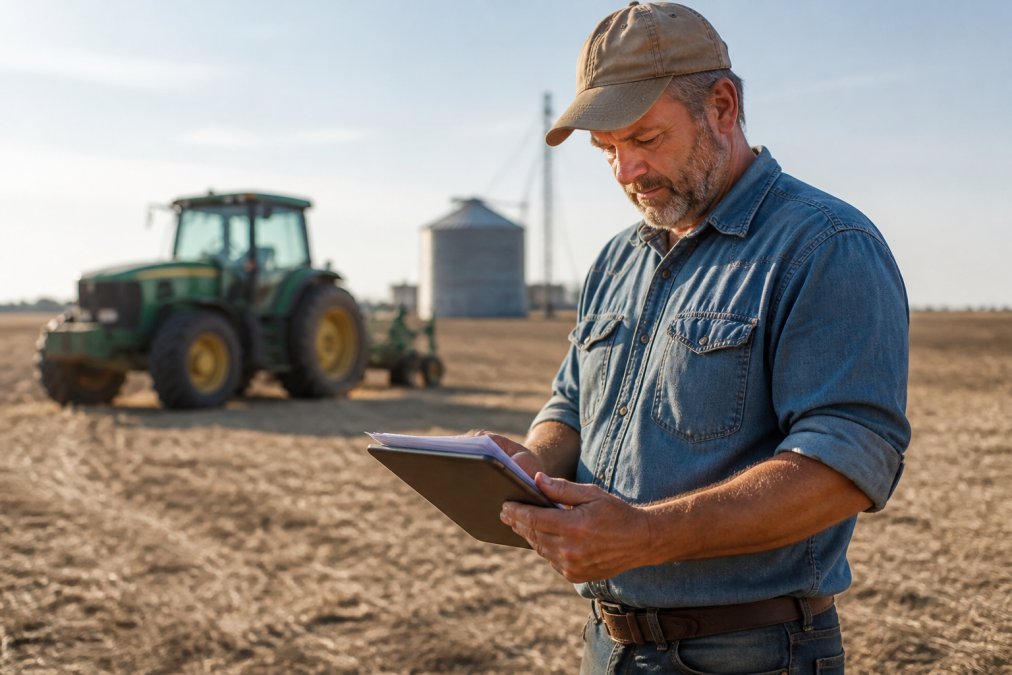
A dedicated service brings operational efficiency. By categorizing expenses correctly throughout the year, you avoid the frantic scramble before tax deadlines and generate the financial reporting lenders expect, from profit and loss statements to balance sheets. Professional oversight turns your financial data into a decision-making tool rather than a historical record you dread reviewing.
What to Look for in Accounting Services for Small Farms
Choosing the right accounting services for small farms requires evaluating more than just price. The ideal provider should demonstrate experience with agricultural enterprises, not just general small business accounting. Ask about their familiarity with farm income averaging, capital expenditures, and the specific tax compliance issues that affect your crop or livestock type.
Understanding Cash-Basis vs. Accrual Accounting
Cash-basis accounting records income when cash is received and expenses when they are paid, making it popular among small farms because it aligns well with seasonal cash flow. Accrual accounting records income and expenses when they are earned or incurred, regardless of when cash changes hands, offering a more accurate picture of long-term profitability.
Most small farms operate on a cash basis for tax purposes, which simplifies tax return preparation. However, many lenders prefer accrual-based statements because they reflect the true economic activity of the farm. A skilled accounting service will often maintain records on a cash basis for tax filings while using accrual adjustments internally, giving you tax efficiency and a realistic view of your farm’s financial health.
Farm Tax Deductions for Independent Contractors and Farm Owners
Farm owners often overlook deductions they are entitled to because they do not track expenses with tax compliance in mind. The IRS Schedule F (Form 1040) is the backbone of farm tax reporting, and its line items reveal the full breadth of deductible categories, from feed and seed to repairs and maintenance. The real value comes from understanding the less obvious, high-impact deductions that a generalist accountant might miss.
Specific Deductions That Move the Needle
Soil and Water Conservation Expenses (IRS Code Section 175): If you are implementing conservation practices like terraces, grassed waterways, or drainage systems, you may deduct up to 25% of your gross income from farming for these expenses in the year they are paid (irs.gov). This dollar-for-dollar deduction requires a conservation plan approved by the Natural Resources Conservation Service (NRCS).
Depreciation and Section 179 Expensing: The IRS allows farmers to deduct the full cost of qualifying equipment in the year it is placed in service, up to a limit set annually under Section 179 (irs.gov). The IRS allows farmers to deduct the full cost of qualifying equipment in the year it is placed in service, up to a limit set annually under Section 179. Bonus depreciation under Section 168(k) allows an immediate deduction on new qualifying property. You must elect Section 179 on Form 4562, and the asset must be used more than 50% for business.
Prepaid Farm Supplies (the “Feed Rule”): The IRS restricts prepaid expenses unless you meet the safe harbor exception for a business purpose. A dedicated farm accountant structures these purchases to stay within the safe harbor while still capturing the deduction.
Farm Income Averaging (Schedule J): Farmers can elect to average their taxable income over the prior three years, smoothing out the tax liability from a spike year (irs.gov). This is particularly powerful for independent contractors who do custom harvesting or hauling, as those income streams can be highly volatile. The election is made on Schedule J and can only be revoked with IRS consent.
The Independent Contractor Angle
For farm owners who also do custom work for other farms, the deduction landscape multiplies. You must allocate vehicle expenses between the farm operation and the custom service business. The standard mileage rate is a common option, but many farmers find that the actual expense method yields a larger deduction when equipment is heavily used. The key is maintaining a contemporaneous mileage log that separates farm-use from custom-work-use miles.
Deductions Specific to Livestock and Specialty Crops
Livestock operations have unique rules. The cost of raising animals for sale is generally not deductible until the animals are sold, but feed, veterinary care, and breeding stock maintenance are deductible as ordinary expenses. Breeding cattle and specialty crops have specific depreciation rules. For specialty crop growers, the cost of establishing an orchard or vineyard must be capitalized and depreciated over its productive life.
A common red flag in farm audits is the misclassification of personal living expenses as farm business expenses. The IRS scrutinizes the farmhouse, personal vehicles, and family labor payments. A professional service will maintain a clear separation between personal and business accounts to protect your deduction claims.
Best Accounting Software for Small Farms: DIY vs. Outsourced
Cloud-based software options like QuickBooks Online offer strong features, including automated bank feeds and customizable reporting, which can be adapted for agricultural use. However, the data entry burden and the need to understand agricultural accounting principles still fall on you. QuickBooks is a solid choice, but it requires setup to handle specific agricultural accounting needs.
The Missing Link: Farm Management Software Integration
The most significant pain point for small farms is bridging the gap between field-level operational data and financial records. Most farm owners track crop yields, livestock health, and input applications in a farm management system (FMS), while their financial data sits in accounting software. These two systems rarely talk to each other, forcing farmers to manually re-enter data or maintain parallel spreadsheets.
This disconnect creates real problems. When you apply fertilizer in April, the cost should flow into your financial statements as a crop input expense. But if your FMS records the application rate and your accounting software records the invoice separately, you end up with two versions of the truth.
What Integration Actually Looks Like
A modern accounting service for small farms should not just hand you a QuickBooks login, they should help you architect a data flow. Designate the FMS as the source of truth for operational metrics and the accounting software as the source of truth for financial transactions, with the integration layer connecting them by mapping cost centers and revenue streams.
For example, a 500-acre corn and soybean operation might use Agworld to track applications per field. The accounting service sets up class tracking in QuickBooks by field or enterprise. When the input invoice arrives, it is coded to the correct class. At harvest, yield data from Agworld is matched against revenue in QuickBooks, allowing the farmer to see a true profit-per-acre calculation.
Practical Integration Options for Small Farms
Option 1: Manual Export/Import (Lowest Cost)
Most FMS platforms allow you to export field-level cost and yield data to CSV. A bookkeeper can import this into QuickBooks monthly, mapping it to the correct accounts and classes. This is labor-intensive but works for farms under 1,000 acres with limited transaction volume.
Option 2: Middleware Connectors
Tools like Zapier or Workato can connect certain FMS platforms to accounting software, automating the transfer of invoice data or expense records. However, these connectors are often brittle and require ongoing maintenance. They work best when the FMS has a robust API.
Option 3: Full-Service Integration Support
Some accounting firms that specialize in agriculture offer integration setup as part of their onboarding. They will configure your QuickBooks chart of accounts to mirror your FMS field structure, set up automated bank feeds, and establish a monthly reconciliation workflow that ties operational data to financial statements. This is the highest-value approach because it removes the technical burden from the farmer.
The Software Decision Framework
When choosing software, the question is not just “QuickBooks vs. a human”, it is “what software stack supports my operational data flow?” For most small farms, accounting software that supports class tracking, location tracking, and project profitability is the right financial hub. Other alternatives exist, but some may be too simplistic for farm operations that need inventory tracking for livestock or multi-enterprise reporting.
| Option | Best For | Key Advantage | Main Drawback |
|---|---|---|---|
| DIY Software (e.g., QuickBooks) | Farms comfortable with data entry | Lower monthly cost, full control | Requires accounting knowledge, time commitment |
| Outsourced Service | Owners focused on operations | Done-for-you books, expert guidance | Monthly fee, less hands-on control |
| Hybrid Approach | Growing farms needing strategy | Software access plus expert review | Requires clear communication |
| FMS + Accounting Integration | Farms tracking field-level profitability | Eliminates duplicate data entry, enables per-field P&L | Setup complexity, ongoing maintenance |
The real competitive advantage is not choosing between software and a professional, it is building a technology stack where your operational data (what happens in the field) and your financial data (what happens in the bank) tell the same story. A dedicated accounting service should be able to architect this integration for you, not just hand you a login.
Outsourcing to a professional service removes the data entry burden entirely, but the best services go further by actively managing the integration between your FMS and your accounting platform. If you are spending weekends reconciling field records against bank statements instead of managing your operation, the cost of a service that handles this integration is easily justified.
Managing Seasonal Cash Flow and Financial Forecasting
Cash flow management is the most persistent challenge for farm owners. Revenue arrives after harvest or livestock sales, but expenses for inputs and labor occur months earlier. Effective accounting services for small farms focus on forecasting these seasonal cycles, helping you plan for periods of low cash balance and avoid expensive short-term borrowing.
Financial forecasting involves projecting income and expenses for the upcoming fiscal year based on historical data and current market conditions. A good accountant will help you build a budget that accounts for variability in yields and prices, and assist in structuring loan applications by presenting a clear picture of your farm’s ability to repay debt. This proactive planning separates thriving farms from those constantly stressed about making payroll or paying suppliers.
Your Farm Bookkeeping Checklist for Tax-Ready Records
Staying organized throughout the year is the secret to a stress-free tax season. Rather than sorting through a shoebox of receipts in March, implement a routine that keeps your records audit-ready. This farm bookkeeping checklist keeps you on track month by month:
- Reconcile bank and credit card accounts monthly to catch errors early.
- Categorize all expenses immediately, separating personal from business purchases.
-
- Track inventory of supplies, feed, and livestock to ensure accurate cost of goods sold.
- Record all income, including government program payments, in the correct period.
- Maintain a mileage log for all farm vehicles and equipment used for business.
- File all receipts for capital expenditures and major repairs for depreciation schedules.
- Review your profit and loss statement quarterly to monitor trends.
This level of organization supports audit support if you are ever reviewed by the IRS and makes year-end tax return preparation faster and more accurate. It also provides the financial reporting necessary for strategic planning.
The Bottom Line on Farm Financial Management
The complexity of agricultural finances demands more than a generic approach. From understanding farm tax deductions to managing seasonal cash flow, having a dedicated partner makes a measurable difference in your farm’s profitability. The right accounting services for small farms do not just keep your books; they provide the strategic foresight needed to navigate market fluctuations and invest wisely.
At AMG Accounting, we specialize in translating complex financial data into plain English, offering everything from bookkeeping to fractional controller services tailored for small businesses and independent contractors. Get started with AMG Accounting and turn your financial records from a source of stress into a foundation for growth.
Frequently Asked Questions
What does a farm accountant do?
A farm accountant handles more than data entry. They set up a chart of accounts tailored to your operation, categorize income and expenses correctly, and prepare financial statements like profit and loss reports. They also plan for tax obligations, track depreciation on equipment, and help you understand your cost of goods sold. Many services provide guidance on cash flow management so you can plan for slower months. The goal is to keep your books accurate for tax filing and to give you a clear view of which parts of your farm are profitable.
What expenses can you write off for a farm?
Common farm tax deductions include costs for seeds, feed, fertilizer, and livestock. You can also deduct expenses for fuel, repairs, and maintenance on farm vehicles and equipment. Hired labor wages, insurance premiums, and interest on farm loans are typically deductible. If you are an independent contractor, those deductions apply to your farm business. Do not overlook depreciation on capital expenditures like tractors or buildings, and keep receipts organized to support every deduction you claim.
What bookkeeping software is best for small farms?
The best software depends on your farm’s size and complexity. Accounting software that adapts to farm-specific charts of accounts is a common choice. Many farm owners use these tools themselves or share access with an accounting service, which keeps the books accurate without adding data entry to your day.
Leave a Reply